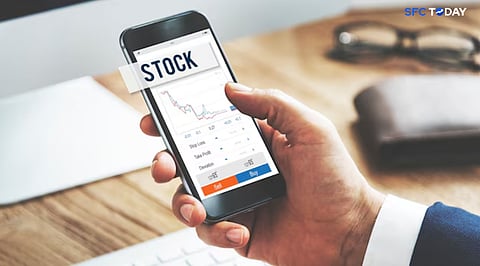

A demat account acts as a digital vault for your assets, allowing you to participate in the Indian equity markets. Instead of relying on paper documentation for proof of ownership, your holdings are stored electronically. Before you can buy stocks, you need to open a demat account; without one, you won't be able to trade.
Setting up a demat account now requires less effort and can mostly be done online. Thanks to fintech advancements, the process has become much more efficient, with fewer forms and fewer delays. When users understand what to expect, opening a demat account feels straightforward and quick.
Not just limited to shares, a demat account holds bonds, mutual funds, and ETFs - all in digital form. Instead of money, it holds investment assets, much like banks hold deposits. Functionally, it mirrors banking systems yet focuses solely on securities. In India, oversight is split between two key institutions managing these accounts. National Securities Depository Limited operates one system; alongside it, Central Depository Services Limited also runs one.
Facing the market, depository participants link investors directly to financial bodies. While handling transfers, they bridge individual accounts with larger systems behind the scenes. From settlement to record-keeping, their role unfolds quietly within structured networks. Behind each transaction stands an intermediary, making access smoother without visible effort.
A single bank, brokerage firm, or financial services provider might act as a depository participant. Being registered with NSDL or CDSL ensures compliance with regulations.
Because trust matters, choosing someone dependable means fewer problems during exchanges, stronger support when needed, and one benefit stands out: the protection of login details. How well known they are, what tools their system runs on, how quickly agents respond - all shape the outcome slowly but surely.
Not every provider sets fees the same way. A few charge a fixed fee per transaction, whereas others base pricing on a percentage of the trade value.
When picking a platform, think beyond just fees. A closer look at features like research access or app quality often reveals better fits. Some offer strong learning resources instead of cheap trades - that trade-off matters. The tools available can shape how well someone manages investments over time. Value shows up in unexpected areas, not only in pricing. Final decisions benefit from carefully weighing these differences.
A demat account needs a valid ID plus proof of your address. People often submit these papers:
PAN card for tax identification
Aadhaar card or passport for identity verification
Payment information needed to move money between accounts
Recent photograph and signature
Faster processing begins when paperwork is prepared in advance.
Filling out forms online is common among depositary services. After personal information is entered, files are uploaded shortly after. Digital signatures complete the process in sequence. After data submission, verification usually follows without delay.
Faster handling of new accounts now happens through digital methods. When checks require additional confirmation, paper documents may still be used.
A small but growing number of firms now rely on video calls to confirm identities. Compliance often depends on how well customer verification is done, especially when someone shows their identity face-to-face online.
With correct details, processing stays on track. After the checks are finished, the demat account moves closer to going live.
A demat account works with a trading account and an associated bank account. Funds move through the bank channel when purchasing securities.
A link between the buyer and market platforms begins with the trading account. When combined, the trio of accounts operates as a unified financial structure.
Once activated, users receive login credentials that grant access to trading systems. Getting to know the layout - like dashboards and tracking tools - helps investors navigate more easily. Reports can be found in dedicated areas, often grouped by time or type.
Fewer mistakes happen when traders learn the system before going live. Getting familiar reduces missteps under pressure.
One step before jumping into trading: get clear on how orders work. Execution happens right away with market orders, using the current price. A set price controls when limit orders go through - no earlier, no later. Knowing these differences shapes what comes next.
When markets swing sharply, stop-loss orders act as a safeguard. Understanding such mechanisms tends to improve the consistency with which traders follow their plans.
Starting small allows confidence to grow gradually. Instead of chasing gains, first attempts are better spent understanding the process. Though profits matter later, initial steps thrive on observation. Learning becomes stronger when pressure fades early. With time, experience replaces uncertainty naturally.
Over time, facing situations slowly lowers emotional strain while sharpening choices made under pressure.
A look at your portfolio now and then keeps you informed about what you own, how much you've gained or lost, and every trade you've made. These details come through monthly reports issued by storage providers, making everything visible. Though routine checks might seem small, they form the backbone of clear oversight. When results are monitored, plans adjust more effectively while spending stays under control.
Getting into the stock market often begins with opening a demat account. Thanks to online systems, doing so now takes less time, feels safer, yet remains straightforward. What once required visits and paperwork now happens mostly at home, behind a screen.
Starting can feel uncertain, but clarity comes with preparation. A well-chosen platform, combined with organized documents, lays the groundwork. Knowing how key trading features work makes early steps easier. Confidence builds not from speed, but from small, informed choices. The beginning matters most when each move is deliberate.