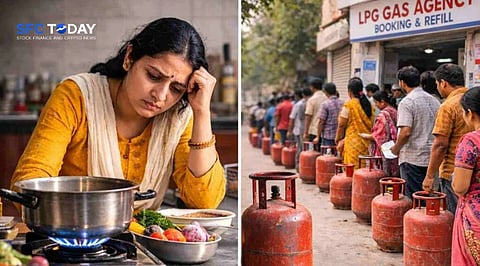

The LPG supply crunch triggered by the West Asia crisis has pushed up the cost of basic roadside meals across Indian cities, hitting daily-wage earners and low-income workers the hardest.
Subhash Kumar, an acupressure therapist, told TOI that his routine meal of four puris and sabzi now costs Rs 100, up from Rs 50 earlier. "My income is the same but expenses have gone up," he said.
Street food vendors say they had no choice but to raise prices. A plate that used to cost Rs 30 to Rs 50 is now priced between Rs 80 and Rs 100. Tea, once sold for Rs 10, has gone up to Rs 15. Two stuffed parathas that cost Rs 50 earlier now sell for Rs 80 to Rs 100.
The price surge traces back to a sharp rise in black-market LPG rates. Raman Kumar, who runs a small meal counter on Sohna Road, said LPG that earlier cost around Rs 1,200 in the black market now costs up to Rs 5,000. Most street vendors rely on the black market because they do not hold formal commercial connections.
Pawan Paswan, a tea stall owner in Udyog Vihar, said securing a cylinder has become a daily struggle. Rani, a cleaner who relied on a Rs 10 cup of tea during work breaks, said she will now have to cut down.
The problem goes beyond prices. Vendors are also reducing portion sizes to absorb some of the cost. Rakhiram, a vendor in Sector 37, reduced the size of samosas while also implementing a 20 percent price hike. "Input costs have gone up and there is no other way," he said.
What worries workers most is that prices may not come down even after supply normalises. Mohammad Saddam, a delivery partner, said vendors are unlikely to reverse hikes once the LPG crisis eases. For thousands who depend on cheap roadside meals to get through the day, that fear is more unsettling than the crisis itself.