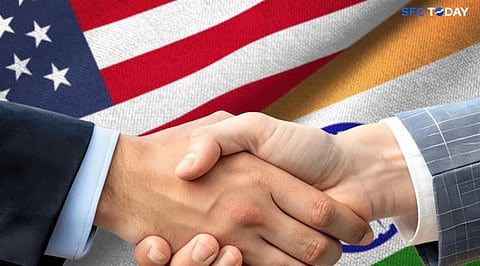


India and the United States are moving to translate their trade understanding into a legally binding interim agreement. This step could roll back steep tariffs and bring much-needed predictability for exporters who have spent months navigating shrinking margins and uncertain orders.
India’s chief negotiator, Darpan Jain, is set to travel to Washington to finalise the legal text, with both sides working towards a March signing. The urgency reflects the economic weight of the US market, which remains the largest destination for Indian goods and a critical source of demand for sectors such as engineering, pharmaceuticals, and textiles.
The proposed reduction in the US reciprocal tariff from 25% to 18%, along with the withdrawal of an additional penalty duty linked to India’s Russian oil purchases, offers immediate relief.
Exporters say the earlier spike in tariffs had begun to erode price competitiveness and delay fresh orders, particularly for small and medium-sized firms operating on thin buffers.
The rollback is expected to restore some confidence at a time when global demand remains uneven. For labour-intensive sectors, even a modest duty reduction can determine whether a contract stays in India or moves to a rival manufacturing hub.
Officials have made it clear that the more ambitious gains, including zero-duty access for select product lines and wider market openings, will kick in only after the agreement is formally signed.
India’s reciprocal concessions are also tied to that timeline, suggesting that the current focus is on stabilising trade flows before deeper integration begins. This sequencing allows New Delhi to deliver quick relief to exporters while retaining negotiating space on sensitive sectors.
The interim pact fits within the broader ambition of reaching $500 billion in bilateral trade by 2030. That goal will require India to expand imports from the US in areas such as energy and aviation. This shift could address American concerns over the trade balance but may also narrow India’s surplus.
For now, the human story lies with exporters who have watched costs rise, and orders wobble. The promised tariff relief may not solve every structural challenge, but it offers something businesses value just as much: the ability to plan again.