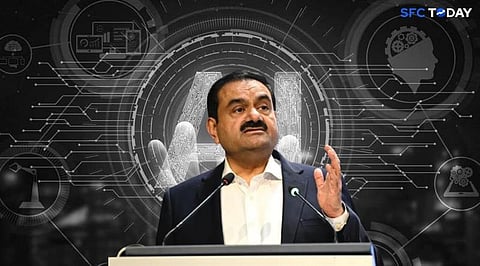


Adani Group has announced a huge investment of $100 billion to build large, green data centres across India by the year 2035. The plan was revealed on February 17, 2026, and it focuses on creating powerful digital infrastructure for artificial intelligence (AI). This move is seen as one of the biggest private investments in AI-related infrastructure anywhere in the world.
The company aims to combine renewable energy and high-performance computing. Instead of depending on fossil fuels, these data centres will mainly run on solar and wind power, supported by battery storage systems. This approach connects clean energy with digital growth, which is becoming more important as AI systems require enormous amounts of electricity.
Right now, the company have about 2 gigawatts (GW) of data center power capacity. Over the next few years, it plan to increase this to 5 GW.
It will also spend about $55 billion on renewable energy and battery storage. This are to make sure there is always enough stable power for AI systems.
AI tasks, like training large language models and running complex programs, needs powerful servers and special chips. These uses a lot of electricity and create a lot of heat.
By using clean energy, better cooling systems, and battery storage, the company want to make AI more environmentally friendly. It will be challenging, but the goal are clear.
The company believes that this $100 billion investment will attract even more capital into India’s AI ecosystem. According to internal projections, the initiative could generate an additional $150 billion in related industries. That includes cloud services, hardware manufacturing, server production, and supply chain development. Altogether, this could create a $250 billion AI infrastructure ecosystem by 2035.
This is not just about buildings filled with computers. It is about developing an entire industry around advanced computing. Manufacturing of chips, cooling equipment, power electronics, and storage systems could see rapid growth. If executed properly, it may create thousands of jobs and strengthen India’s position in global technology markets.
After the announcement, shares of companies within the Adani portfolio increased by around 2–3%, reflecting investor confidence. Market analysts described the move as bold and long-term focused. Many experts say that demand for AI-ready data centres is growing fast worldwide, and India wants to capture a larger share of that demand.
Discussions with global cloud companies and technology firms are also part of the broader strategy. Partnerships could help bring advanced hardware and knowledge into the country. There is also strong alignment with India’s national goal of digital growth and self-reliance in technology infrastructure.
One of the main highlights of this plan is sustainability. The data centres are expected to rely heavily on solar and wind energy, supported by large Battery Energy Storage Systems (BESS). These batteries will store excess power and provide electricity when renewable generation is low. This helps maintain round-the-clock operations, which AI computing requires.
However, there are challenges ahead. Building such large-scale infrastructure need skilled workers, stable supply chains, and regulatory approvals. Global shortages of advanced chips and hardware components could slow down the progress. Also, other international companies is investing heavily in similar projects, so competition will be strong.
Even with these risks, the announcement signal serious intent. The scale of investment show confidence in India’s digital future. If successful, this effort could reshape how AI infrastructure are built — linking clean energy directly with high-performance computing. It may changes the technology landscape in the country for decades to come, though execution will decide everything in the end.