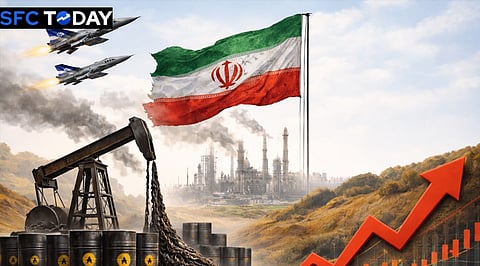

India’s macroeconomic outlook is facing heightened risks as oil prices edge toward $90 a barrel following US-Israel strikes on Iran. With a significant share of Indian crude imports transiting the key Strait of Hormuz, potential supply disruptions could widen the import bill, pressure the rupee and fuel inflationary concerns.
The rising tension across the Middle East has pushed crude oil back into focus for both the Indian economy and Indian markets. Analysts warn that the latest escalation in conflict could sharply increase oil price volatility and hurt India’s trade balance if the conflict widens.
Brent crude has already climbed to a seven-month high of around $72.8 per barrel amid fears of supply disruption. Though the OPEC+ agreeing to a modest supply increase is good news, in terms of reigning in the price volatility, it is a crucial macro-economic factor that the street will be watching out for.
JM Financial, in its report, noted that limited retaliation could push prices up by nearly $5–10 per barrel. However, direct damage to Iranian oil infrastructure could add $10–12 per barrel.
The report further noted that any potential disruption of supply through the Strait of Hormuz is a key factor to watch. According to JM Financial, any supply disruption from the area could lift crude prices above $90 per barrel. The Strait, located between Iran and Oman, handles a substantial share of global energy shipments as well as large volumes of merchandise trade.
Prashant Vasisht of ICRA noted that the conflict could impede energy shipments through the Strait of Hormuz for Iran and other Middle East producers.
“A prolonged and/or widening conflict involving several oil and gas producers and the Strait of Hormuz could adversely impact global crude oil and LNG supplies and raise energy prices globally,” Vasisht said.
“For Indian refiners, while crude oil could be sourced from alternate locations such as the US, Africa, and South America, elevated energy prices could lead to a soaring import bill. Additionally, higher crude oil prices would moderate marketing margins and profitability of oil marketing companies,” he added.
Gaura Sengupta, chief economist at IDFC First Bank said that the rupee’s level along with crude and geopolitics is an important factor to monitor, The escalation in geopolitical risks is expected to be short-lived.