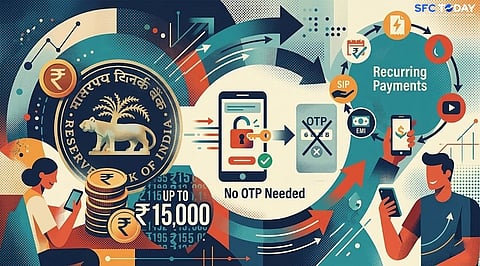

Reserve Bank of India (RBI) has presented an e-mandate framework to streamline recurring digital payments without compromising on user protection. The new regulations allow automatic transactions up to Rs. 15,000, without the use of a one-time password (OTP), which is a big step towards frictionless digital payments.
The new structure enables users to authorize a continuous payment requirement after additional factor authentication (AFA). Once this verification is done, then the payments like OTT subscriptions, utilities bills, loan EMIs and memberships up to Rs. 15,000 will be automatically debited without the need to enter the OTP.
The move should enhance the user experience in the fast-growing digital payment ecosystem in India, where recurring payments comprise a notable portion of overall volumes.
Despite this, the RBI has maintained tougher checks on transactions of higher value. Individuals making payments over Rs. 15,000 will need to authenticate them with an OTP, which provides an extra layer of protection in areas with a greater risk.
Given the type of some financial commitments, the RBI has granted exceptions to the Rs. 15,000 limit. There are recurring payments that can be increased to Rs. 1 lakh without OTP, which include insurance premiums, mutual fund investments and credit card bill payments, but they must be registered under e-mandates. This represents the increased size of the ticket and weight of such commitments in the financial planning of households.
Transparency and control are emphasized in the framework. Banks and payment service providers now must send pre-debit notifications at least 24 hours before a transaction. The alerts should contain vital information like the name of the merchant, the amount and the date of debiting, which will provide the user with adequate time to cancel or edit the payment.
Also, AFA allows users to pause, revoke, or amend mandates at any time. In case of variable recurring payments, customers are also allowed to establish an upper transaction limit, which will limit such unforeseen debits.
Also Read: RBI Pushes Oil PSUs to Use SBI Credit Line to Ease Rupee Pressure Amid Rising Dollar Demand
The RBI has also expanded the e-mandate system to cover cross-border payments. Notably, banks cannot charge their customers to use e-mandate services, making them accessible.
The central bank has also extended its zero-liability policy on unauthorized electronic transactions to e-mandates to build more trust. This implies that customers will not incur losses as a result of fraudulent debits, as long as they report them in time.