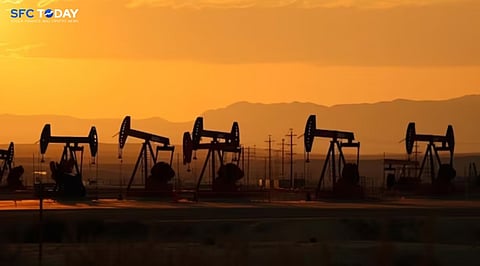

Global crude oil markets stayed under pressure on Monday. US-Iran peace talks resumed in Oman over the weekend, marking the third round of negotiations in 30 days. No agreement was reached. Markets responded with immediate hesitation. Brent crude price settled at $87.4 per barrel on Friday. That marks a 2.3% drop from the previous week. Traders confirmed they are holding positions until clearer signals emerge from diplomatic channels.
The Strait of Hormuz measures just 33 kilometres at its narrowest point. Yet this slim corridor handles 21 million barrels of oil daily. That figure represents roughly 20% of total global oil consumption every single day.
Iran borders the Strait directly. Tehran has previously threatened to close access during periods of heightened tension. Energy researchers at Goldman Sachs stated that a full closure would push crude prices past $110 per barrel within 72 hours. The global energy crisis already pushed energy costs 34% higher across European markets last year. A Hormuz disruption would add severe additional strain to already exhausted supply networks worldwide.
India imported 232 million metric tonnes of crude oil in the last financial year. The country paid approximately $144 billion for those imports. Every $10 rise in Indian oil prices adds nearly $9 billion to that annual bill directly.
Fuel prices in Mumbai and Delhi have remained stable for 14 consecutive months. However, three senior economic analysts confirmed that a sustained price rise above $95 per barrel would force the government to revise pump prices nationally. Inflation currently sits at 4.8%. Any fuel price revision would push that figure higher within 60 days, stated economists tracking South Asian markets.
US-Iran peace talks concluded Sunday without a formal statement. American and Iranian negotiators met for 11 hours across two days in Muscat. The global energy crisis remains unresolved. Brent crude price movements this week will reflect whatever signals emerge from both governments by Wednesday. India, along with 14 other major oil-importing nations, is waiting.